One of the things we love about cabin life is improving our little piece of paradise. What we don’t always love is realizing just how much work some of those improvements actually require.
This spring we tackled one of the biggest projects we’ve ever attempted: building gabion walls to reclaim unusable land and create more functional space on our lower property.
Looking back, we’re proud of what we accomplished. Looking at our sore muscles, we’re also questioning some of our life choices.
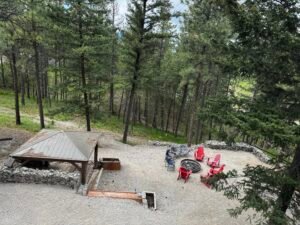
The Vision
The lower portion of our property had several sloped and unusable areas that weren’t doing much for us. We knew that if we could retain the bank and create a level surface, we’d gain a significant amount of usable space around the cabin.
The plan was simple.
Well… simple on paper.
Step 1: Demolition Day
Before we could build anything, we had to remove what was already there.
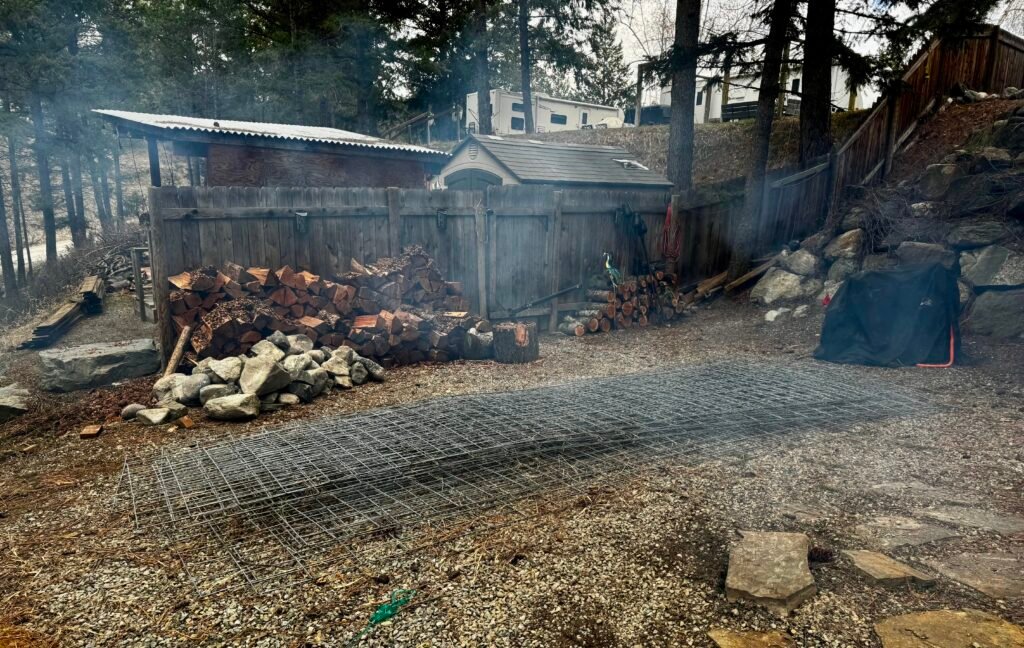
Out came the existing fence.
Then came the flat rock landscaping surrounding the fire pit area.
By the end of the day, what had once looked like a finished yard looked more like a construction zone.
Progress doesn’t always look pretty.
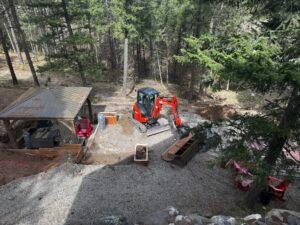
Step 2: Bringing in the Excavator
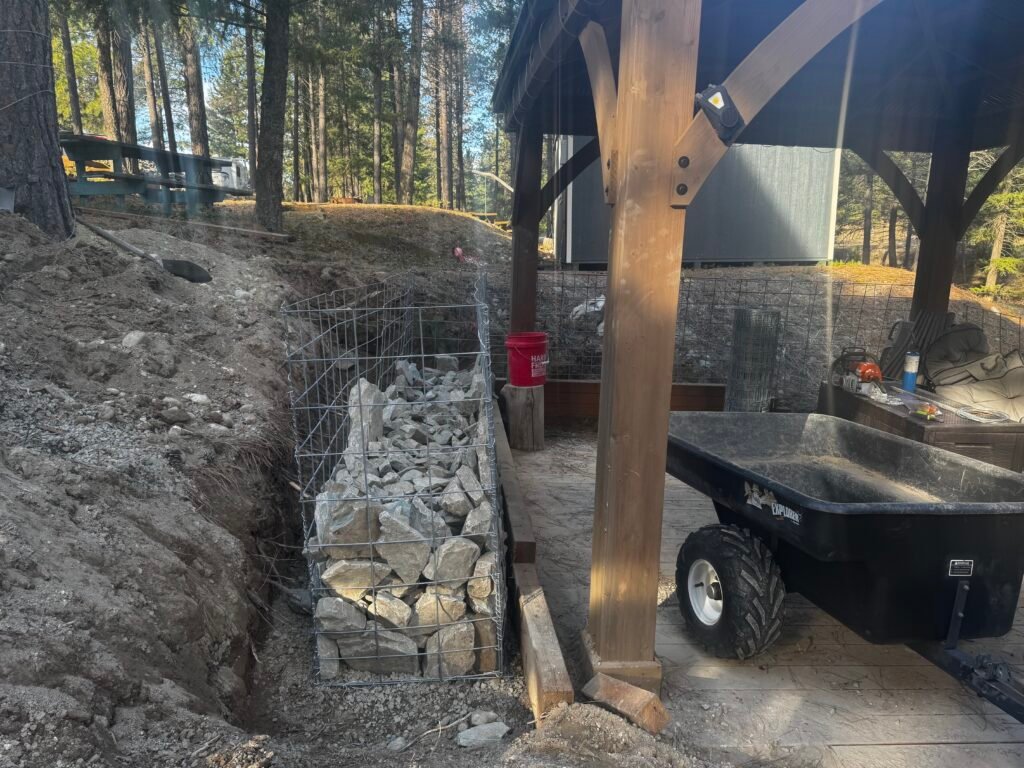
With the area cleared, we hired an excavator to dig the trenches that would eventually hold our gabion walls.
Watching heavy equipment work is always impressive. Watching someone else do in an hour what would take us a week is even more impressive.
Once the trenches were complete, it was time for us to get to work.
Step 3: Building the Gabion Cages
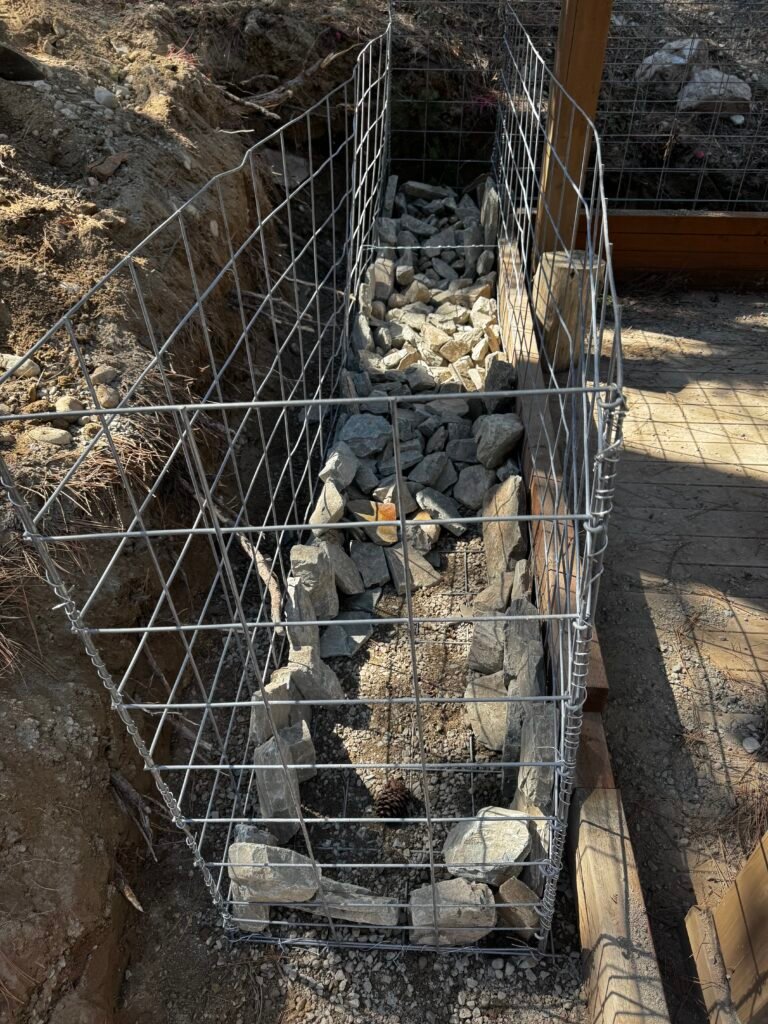
To save money, we decided to build our own gabion cages using cattle fencing we already had on hand.
The cages came together surprisingly well.
At this point, we were feeling pretty confident.
That confidence would soon be tested.
Step 4: Five Truckloads of Boulders
Next came the rock.
And not just any rock.
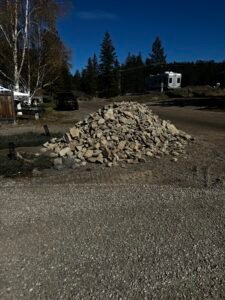
We had five truckloads of six-inch-plus boulders delivered to the property.
Standing beside the first pile, we thought, “This doesn’t look too bad.”
Several hundred rocks later, we had a different opinion.
We hand-placed every single rock into the first gabion cage. It didn’t take long before we realized there was no way we were finishing this project by ourselves.
Calling for Reinforcements
That’s when Carolyn from town came to the rescue.
Having an extra set of hands made a huge difference, but we still had mountains of rock to move.
Literally.
By the second delivery, we made another smart decision and hired Tony and his skid steer.
Best. Decision. Ever.
Tony was able to place large quantities of rock directly into many of the cages, saving us countless hours of lifting, carrying, and placing boulders by hand.
That said, not every cage was accessible to the skid steer.
Several sections still required good old-fashioned manual labor, so there were plenty of rocks that we still had to hand place ourselves.
Enter the Stand-On Skid Steer
Watching Tony work his magic with the skid steer gave us another idea.
If a skid steer could save that much labor, maybe we could handle some of the remaining work ourselves.
So we rented a stand-on skid steer and Anthony climbed aboard.
Operating a stand-on skid steer on sloped terrain is a lot different than it looks from the sidelines. There were moments when the machine felt like it wanted to go one direction while Anthony wanted to go another. More than once it felt like we were getting dangerously close to tipping over.
Thankfully, skill, determination, and a healthy respect for gravity kept everything upright.
Let’s just say the machine worked hard—and so did the operator.
By this point, our project budget was still looking better than if we had hired everything out, but the local chiropractor was starting to look like a potential business partner.
Seeing the Transformation
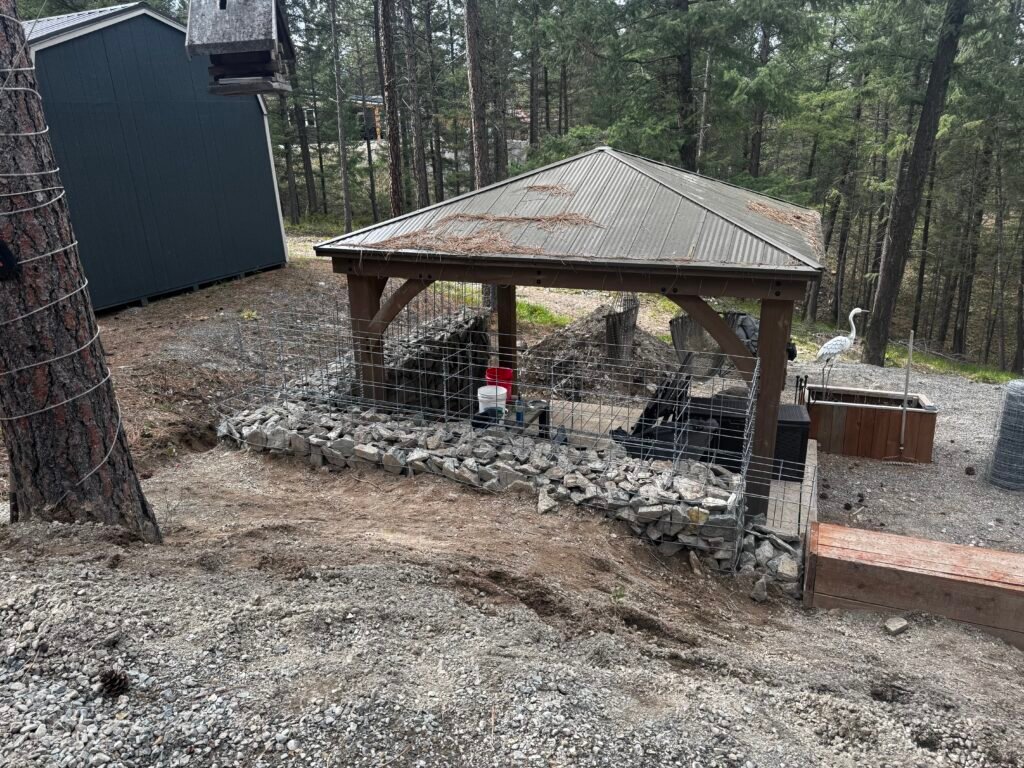
As the gabion walls took shape, something amazing happened.
The lower property suddenly started looking huge.
What had once been sloped, awkward terrain was becoming usable space.
For the first time, we could really see the vision coming together.
Every sore muscle started feeling a little more worth it.
Leveling the New Land
With the walls complete, we moved on to creating a level surface.
That required another two truckloads of 1.5-inch top gravel.
We hired another skid steer operator to help spread and shape the material across the newly expanded area.
Again, we thought the hard work was behind us.
Again, we were wrong.
The Raking and Tamping Marathon
The skid steer got us close.
Really close.
But close isn’t level.
Out came the landscape rakes.
What followed was hours upon hours of raking, smoothing, checking grades, and raking some more.
Once we finally had the surface where we wanted it, we rented a tamper to compact everything.
If you’ve never spent a day pushing a tamper around a large area, consider yourself lucky.
The difference was worth it though. The gravel firmed up beautifully and transformed from soft and loose to solid and usable.
Meanwhile… Trailer Problems
As if the gabion wall project wasn’t enough, our new trailer decided it wanted some attention too.
While Corrine focused on raking, tamping, reinstalling the fence, and putting the fire pit rocks back into place, Anthony tackled several major trailer repairs. Stay tuned for what goes wrong if you buy a second hand trailer and they don’t winterize.
Because apparently one large project at a time would have been too easy.
The Final Result
When we finally stepped back and looked at the finished project, the transformation was incredible.
The gabion walls created a clean, strong retaining structure.
The new level surface dramatically increased the usable square footage of the property.
The fence was back in place.
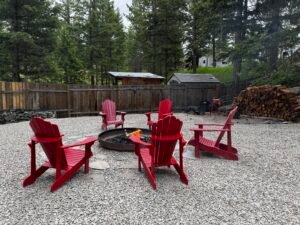
The fire pit area looked better than ever. (Thanks for the help Carolina)
Most importantly, we had created a space we’ll enjoy for years to come.
What We Learned
Would hiring professionals to do the entire job have been easier?
Absolutely.
Would it have cost significantly more?
Also absolutely.
By doing much of the work ourselves and bringing in help only when needed, we were able to save a substantial amount of money while still achieving the result we wanted.
Of course, those savings may have been partially redirected toward massage therapists and chiropractors.
We’ll call that a maintenance expense.
Sometimes the Best Adventures Happen at Home
Wild Roads is usually about the journeys we take, but this project reminded us that some of the biggest adventures happen right in your own backyard.
Or in our case, underneath five truckloads of boulders.
The aches and pains will eventually fade.
The extra usable space at the cabin will be here for years.
And every time we sit around the fire pit, we’ll be able to say:
“We built that.”
Even if we needed a little help along the way.
Have you tackled a project that was much bigger than you expected? We’d love to hear about it. Subscribe to Wild Roads blogs as we share more cabin projects, road trips, RV adventures, and the lessons we learn along the way. We post more often on TikTok and would love a follow. And if you’re planning your own property or outdoor projects, be sure to check out our Amazon Store for some of the tools and gear we use on our adventures.